How long does carpet take to dry after cleaning? In most cases, 2 to 4 hours to touch dry and up to a day to fully dry. That is the honest range, and the exact time depends on how the carpet was cleaned and the conditions in the room. As a carpet cleaning West London team, at Beqiraj Carpet Cleaning we manage this carefully on every job, because a carpet that is left too wet is the number one cause of that musty smell people worry about.
Drying time by cleaning method
The method makes the biggest difference to how long you wait.
Hot water extraction (steam): touch dry in 2 to 4 hours, fully dry within a day. Deepest clean.
Low moisture or encapsulation: 30 to 60 minutes. Great when you need the room back fast.
Dry compound: almost immediate, since very little moisture is used.
DIY rental machine: a day or longer, because weak suction leaves more water behind.
What affects how long carpet takes to dry?
Two carpets cleaned the same way can dry at different speeds. These factors matter most:
- Airflow. Open windows and moving air dry a carpet far faster than a sealed room.
- Humidity. On a damp or rainy day, drying takes longer because the air already holds moisture.
- Pile thickness. A thick, deep pile or shag carpet holds more water than a low, tight weave.
- Room temperature. A warmer room speeds up evaporation.
- Fibre type. Wool holds moisture longer than synthetic fibres.
- Technique. Strong professional extraction pulls out most of the water, so the carpet starts off far less wet.
How to make your carpet dry faster?
You can speed things up with a few simple steps once we have finished:
- Open windows to get air moving through the room
- Put a fan on, or use air movers if you have them
- Turn on the heating gently, or run a dehumidifier to pull moisture from the air
- Keep foot traffic off until the carpet is at least touch dry
- Leave furniture off the carpet until it is fully dry to avoid marks
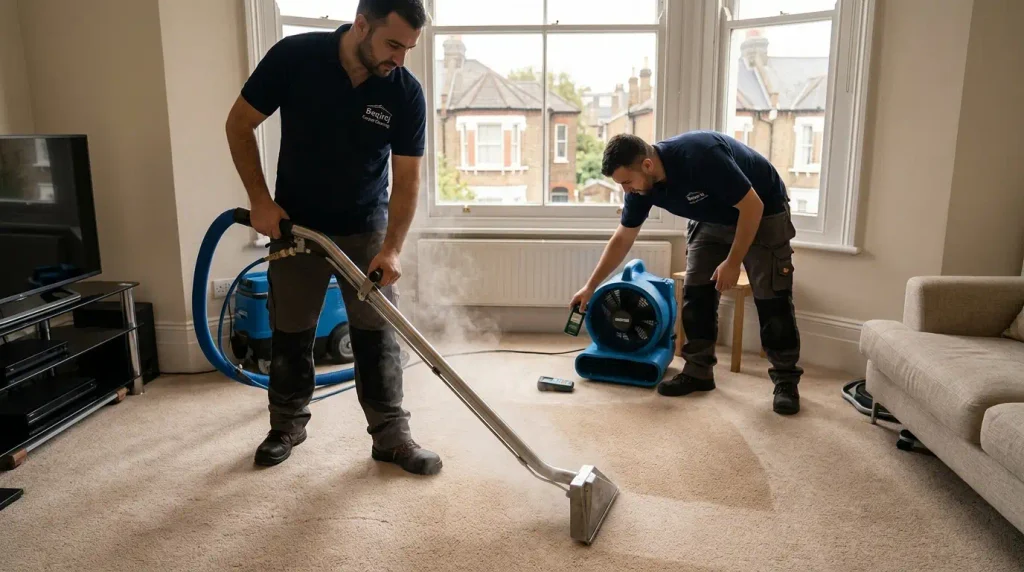
On our jobs we often use air movers to cut drying time, which is one of the advantages of a professional clean over a hired machine.
Why you should not rush onto a damp carpet
It is tempting to walk on a carpet as soon as it looks dry, but a still damp carpet picks up dirt from your shoes much faster, and pressing furniture onto it can leave dents or rust marks. There is also the issue of over wetting. If a carpet stays soaked for too long, moisture can reach the backing and underlay, which risks a musty smell or even mould. This is exactly why controlled extraction and proper drying matter so much.
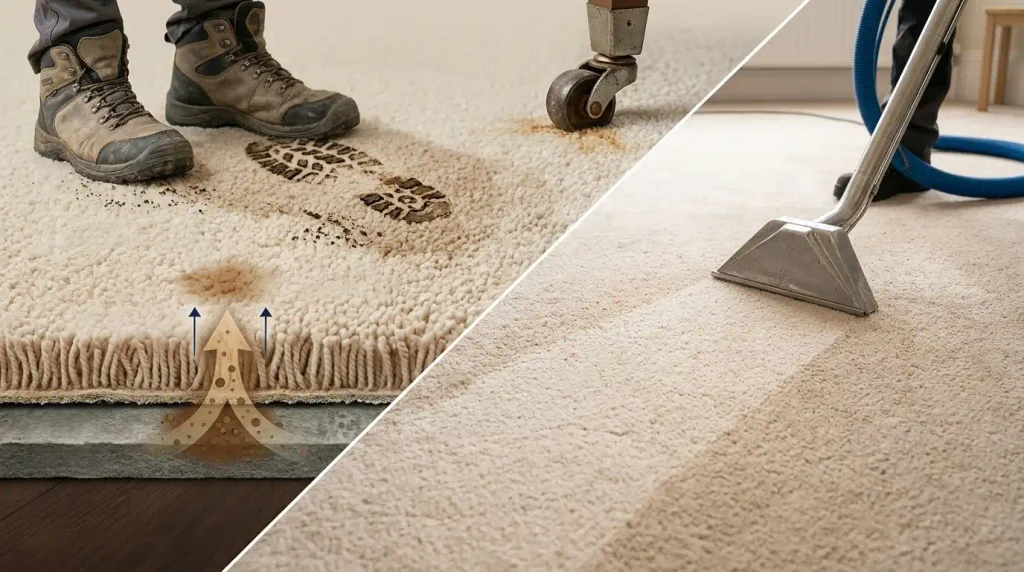
What is wicking, and why does my stain come back?
If a stain seems to vanish during cleaning and then reappears as the carpet dries, that is wicking. As the water evaporates upward, it carries dissolved dirt from deep in the backing back to the surface. It is far more common after a DIY clean that leaves too much water behind. Professional hot water extraction removes that moisture in one pass, so wicking is far less likely.
Need it dry fast? Choose the right method
If drying time is your main concern, tell us before we start. For a quick turnaround we can use low moisture cleaning, which is usually walk on ready within the hour. For the deepest clean, hot water extraction is best, and we speed the drying with air movers.
Frequently asked questions
How long does carpet take to dry after cleaning?
After a professional clean, carpet is usually touch dry within two to four hours and fully dry within about a day. Low moisture cleaning is faster, often walk on ready within an hour.
Can I walk on my carpet while it is drying?
Light walking in clean socks is usually fine once the carpet is touch dry, but keep heavy traffic and shoes off until it is fully dry to avoid picking up dirt.
How can I make my carpet dry faster?
Open windows, run a fan or air mover, turn on gentle heating or a dehumidifier, and keep foot traffic and furniture off until it is dry.
Why does my carpet still feel damp the next day?
This usually means it was over wetted, often by a weak DIY machine, or the room had poor airflow and high humidity. Professional extraction and good ventilation prevent it.