For most homes, steam cleaning, also called hot water extraction, is the better all round choice because it cleans deepest and is recommended by most carpet manufacturers. Dry cleaning wins when you need the carpet dry and usable within an hour or two, or when the carpet is delicate and moisture sensitive.
Choosing between steam cleaning and dry carpet cleaning comes down to one trade off: depth of clean versus drying time. Steam cleaning removes more dirt but takes longer to dry. Dry cleaning gets your room back in use fast but does not reach as deep. Below we break down how each method works, where each one wins, and how to pick the right one for your carpet. If you would rather skip the guesswork, any good carpet cleaning West London service will inspect your carpet and recommend the correct method for free.
What is steam cleaning (hot water extraction)?
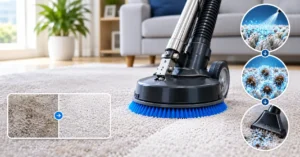
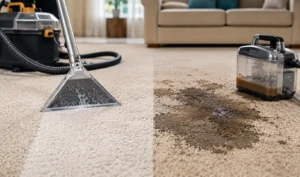
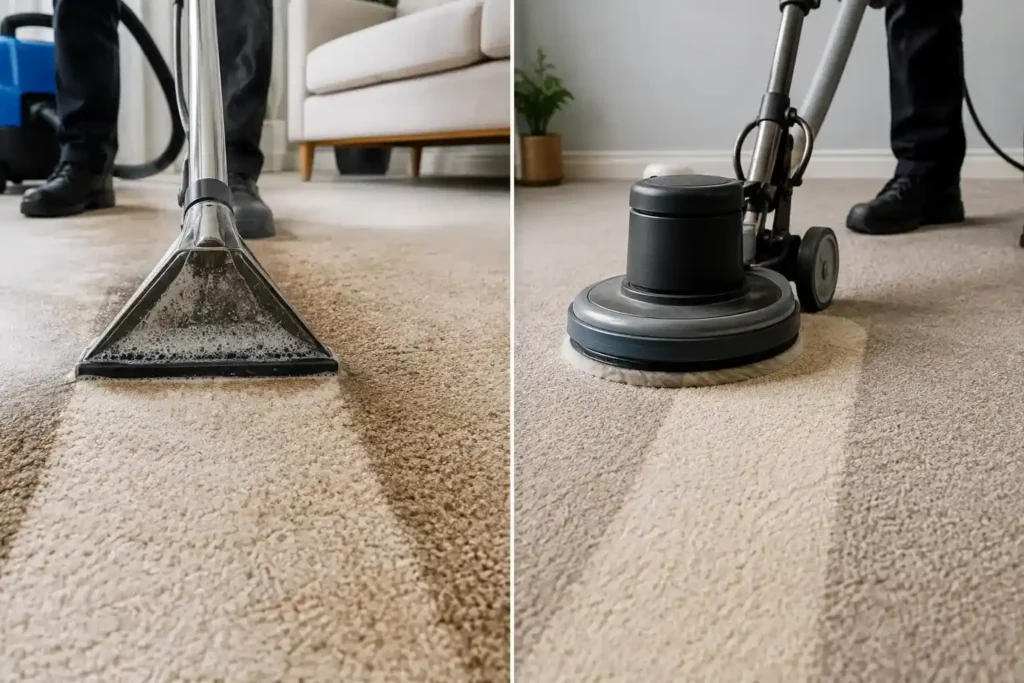
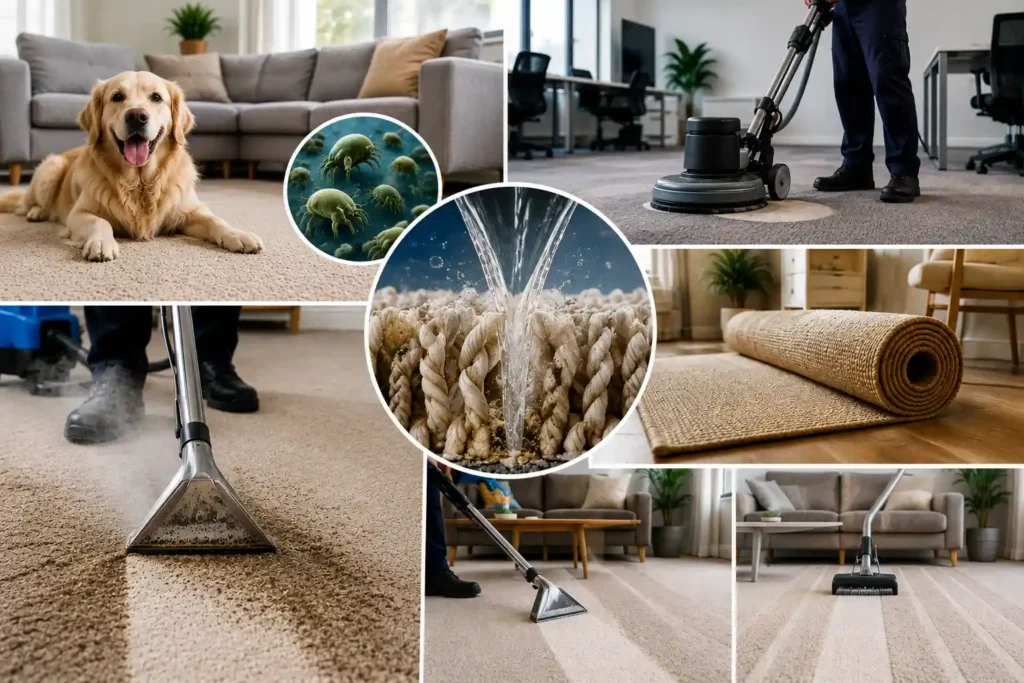
Despite the name, steam cleaning does not actually blast your carpet with steam. The proper term is hot water extraction. Hot water mixed with a cleaning solution is injected deep into the pile under pressure, then almost immediately vacuumed back out along with the dissolved dirt. It is the most thorough method and the one most carpet manufacturers recommend.
It shifts ground in soil, bacteria, dust mites and deep odours that surface methods leave behind. The trade off is moisture: the carpet is left slightly damp and needs a few hours to dry.
What is dry carpet cleaning?
Dry cleaning is an umbrella term for low moisture methods. The two most common are:
- Encapsulation, where a solution crystallises the dirt so it can be vacuumed away.
- Dry compound, where a moist absorbent powder is worked through the pile and then removed with a vacuum.
Very little water is used, so the carpet is walk on ready in around 30 minutes to an hour. The trade off is depth: dry cleaning is excellent for maintenance and light soiling, but it does not flush out deeply embedded dirt the way hot water extraction does.
Steam cleaning vs dry cleaning: a quick comparison
Depth of clean: Steam is deepest. Dry is surface to medium.
Drying time: Steam takes 2 to 4 hours. Dry is ready in 30 to 60 minutes.
Allergens and dust mites: Steam removes them thoroughly. Dry removes them only partly.
Heavy soiling and odours: Steam is best. Dry is not ideal.
Quick turnaround: Dry wins here. Steam does not.
Delicate carpets: Dry is safer. Steam can be used with care.
Manufacturer recommended: Steam, usually. Dry, sometimes.
Which method is better for your situation?
You have pets or allergies
Choose steam cleaning. Only hot water extraction flushes out the dust mites, allergens, bacteria and deep pet odors that trigger symptoms. A surface clean will not reach them.
You need the room back fast
Choose dry cleaning. Offices, rented rooms, stairs and busy areas that cannot be out of action for hours are ideal for low moisture cleaning, since the carpet is usable within the hour.
Your carpet is heavily soiled
Choose steam cleaning. For years of built up traffic, spills and grime, only deep extraction will genuinely restore the pile.
You have a delicate or natural fibre carpet
Choose dry cleaning for many wool, sisal or antique rugs where heavy wetting is a risk, though a skilled technician can still steam clean wool safely with controlled moisture
You want routine maintenance
Use dry cleaning between deep cleans to keep carpets fresh, and book a full steam clean once or twice a year for the deep reset.
Does steam cleaning shrink or damage carpets?
Not when it is done properly. Damage only happens when a carpet is over wetted or left too long to dry, which causes shrinkage or a musty smell. A trained technician controls the water volume, heat and extraction for your specific fibre, and uses air movers to speed drying, so the risk is minimal. This is exactly why the method matters less than the person doing it.
The verdict:
If you want the single best clean for a typical home, steam cleaning wins. It goes deepest, handles odours and allergens, and is what most manufacturers recommend. Choose dry cleaning when speed or moisture sensitivity is the priority. The smartest approach for many West London households is to combine the two: an annual steam clean for depth, with low moisture cleaning in between to stay fresh.